Market Insight Series - February 2026
What does the current Victoria real estate market look like?
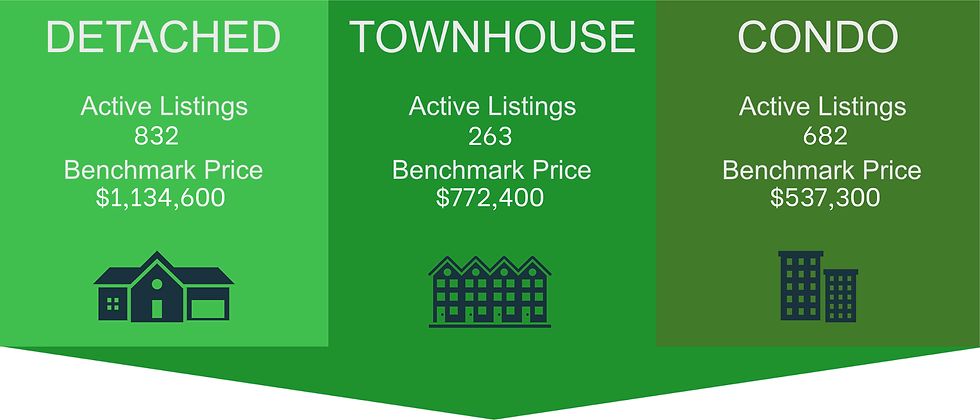
As part of our monthly Market Insight Series, I’m excited to continue bringing you clear, practical insights into the Victoria and Vancouver Island real estate market to help you make smarter buying and selling decisions. Below, I’ll break down the most important market numbers, explain what they actually mean, touch on broader economic factors influencing the market, and wrap up with key takeaways for buyers and sellers. If you’d like to review last month’s Market Insight, click here.

January 2026 Housing Market: Slower Sales, Rising Inventory, and Softer Pricing
January 2026 recorded 339 property sales across the Victoria Real Estate Board region. That’s 19.7% fewer sales than January 2025 and 7.6% lower than December 2025, signalling a slower start to the year. While this may sound concerning at first glance, the overall pattern looks consistent with what we saw in early 2023 and 2024—more seasonal, predictable activity following the intense pace of the pandemic-era market.
Now let’s dig into the details.
Condominiums
Condo sales saw a notable pullback, with 109 units sold, representing a 25.3% decline compared to January 2025. Pricing has also softened modestly. The MLS® benchmark value for a condo in the Victoria Core declined 1.5% year-over-year, from $545,900 in January 2025 to $537,800 in January 2026, and is down from December’s benchmark of $549,900.
Single-Family Homes
Single-family home sales followed a similar trend. 153 homes sold, down 21.1% from January 2025. The benchmark value for a single-family home in the Victoria Core decreased 2.5% year-over-year, from $1,297,300 in January 2025 to $1,265,500 in January 2026. That said, prices did rebound slightly from December’s benchmark of $1,255,000, suggesting some early signs of stabilization.
Inventory: A Key Shift in Market Dynamics
Inventory continues to be the most important story in this market.
At the end of January 2026, there were 2,624 active listings on the Victoria Real Estate Board MLS®—up 3.1% from December and 9.6% higher than January 2025. This elevated level of inventory is significant. Healthy inventory helps absorb demand and reduces upward pressure on pricing, which is exactly what we’re seeing play out.
With strong inventory and reduced sales, the overall market in January sat right on the threshold between balanced and a buyer’s market. While one month doesn’t define a long-term trend, January offered buyers more selection and negotiating power, while sellers faced more defined—and sometimes firmer—pricing realities. As always, Victoria remains a collection of micro-markets, meaning conditions can vary widely by neighbourhood and property type.
Macro Economic Outlook & External Pressures
Beyond local data, broader economic forces continue to influence buyer and seller behaviour. Interest rates, global trade tensions, and overall consumer confidence are playing an increasingly important role in decision-making. While rates have stabilized compared to recent volatility, uncertainty around global trade and economic growth continues to weigh on sentiment, contributing to cautious market participation early in the year.

Home Buyer Considerations
For buyers, the current market presents two distinct scenarios.
First, well-established buyers—those with stable income, strong savings, or existing home equity—are in a relatively favourable position. Higher inventory and softer pricing provide leverage, more choice, and time to make thoughtful decisions. If broader economic uncertainty eases, competition could return later in the year, making current conditions potentially attractive for strategic purchases.
Second, newer buyers or those with less predictable income may benefit from patience. The market is offering clarity rather than urgency, and waiting a few months could provide more certainty around economic conditions and employment stability. That said, if conditions improve more quickly than expected, demand could rebound, reducing negotiating power later on.
Conclusion
At this point, the market does not appear poised for a rapid rebound—but it also isn’t showing signs of distress. The most likely path forward is either a continuation of steady, balanced conditions supported by strong inventory, or a period of increased buyer leverage if economic uncertainty persists.
No matter which direction the market takes, today’s environment is defined by choice, caution, and opportunity. Buying or selling decisions are highly personal and should be guided by your financial position, goals, and risk tolerance. In markets like this, having a knowledgeable and trusted REALTOR® by your side can make all the difference in navigating uncertainty and identifying the right opportunities.
Glossary Term
Interest:
Interest is a charge for borrowing money, typically expressed as a percentage of the principal amount borrowed. For lenders, it's the compensation for temporarily parting with their funds.
Read More:
Resources
1. VREB Insight:
2. Mortgage Calculator:
3. Mortgage Rate By Bank:


Comments